 Business License
Stainless Steel Mixing Tank & Vacuum Homogenizer Emulsifier Guide for Food Beverage & Cosmetic Liqui
Introduction: The Heart of Your Production Line
In the food, beverage, daily chemical, and cosmetic industries, the mixing tank is the heart of every production line. Whether you are manufacturing liquid detergent, shampoo, shower gel, fruit juice, milk, sauce, syrup, or skincare cream, the quality of your mixing and emulsifying equipment directly determines the texture, stability, and consistency of your final product.
A modern stainless steel mixing tank with vacuum homogenizer combines multiple functions into one compact unit – mixing, dispersing, homogenizing, emulsifying, heating, cooling, and vacuum degassing. This integration not only saves floor space and capital investment but also ensures batch-to-batch consistency.
In this blog, we will walk you through what these machines are, why temperature control matters, their key applications across industries, and how to choose the right equipment for your production needs
What Is a Stainless Steel Mixing Tank & Vacuum Homogenizer?
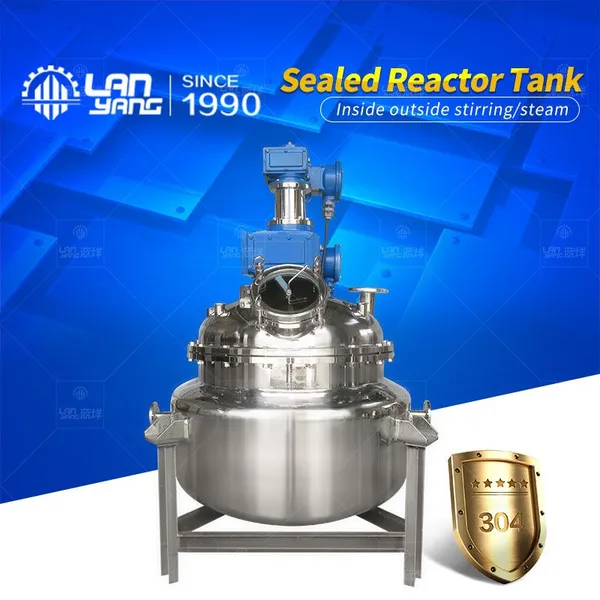
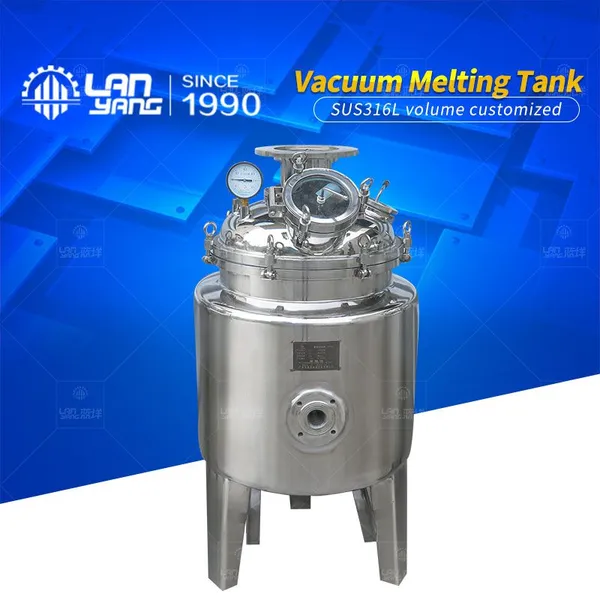
A mixing tank (also called a blending tank, preparation tank, or reaction vessel) is an industrial vessel designed to blend, emulsify, or homogenize multiple materials. It is widely used in industries such as food and beverage, chemicals, cosmetics, daily chemicals, and pharmaceuticals.
When equipped with a vacuum homogenizer and heating/cooling jacket, the tank becomes a multifunctional processing system that can:
Mix liquids, powders, and viscous materials
Emulsify oil and water phases into stable emulsions
Heat or cool products during processing
Remove air bubbles under vacuum conditions
Scrape the tank walls to prevent sticking
Why Temperature Control Matters
Temperature plays a critical role in mixing efficiency and product quality. In industries like food and beverage, pharmaceuticals, and cosmetics, even a slight deviation in temperature can alter the final product's quality, texture, or chemical composition.
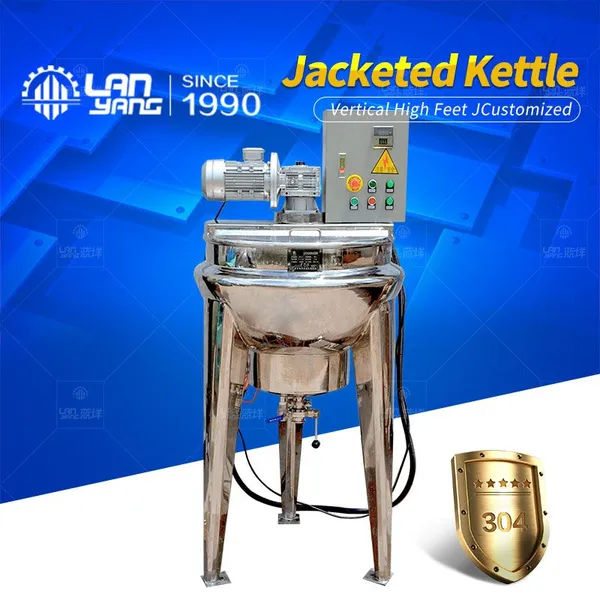
This is where jacketed mixing tanks become essential. A jacketed tank features an additional outer layer (the jacket) surrounding the main tank body. Through this jacket, heating or cooling media such as steam, hot water, thermal oil, or cold water circulate to regulate the internal temperature of the product without direct contact
Key benefits of temperature control include:
Improved product consistency – Uniform heat or cooling ensures every batch meets quality standards
Faster processing – Reaching optimal temperature quickly shortens production cycles
Energy efficiency – Jacketed systems use targeted energy transfer, reducing consumption
Regulatory compliance – Many industries have strict standards for processing conditions
Core Components & How They Work
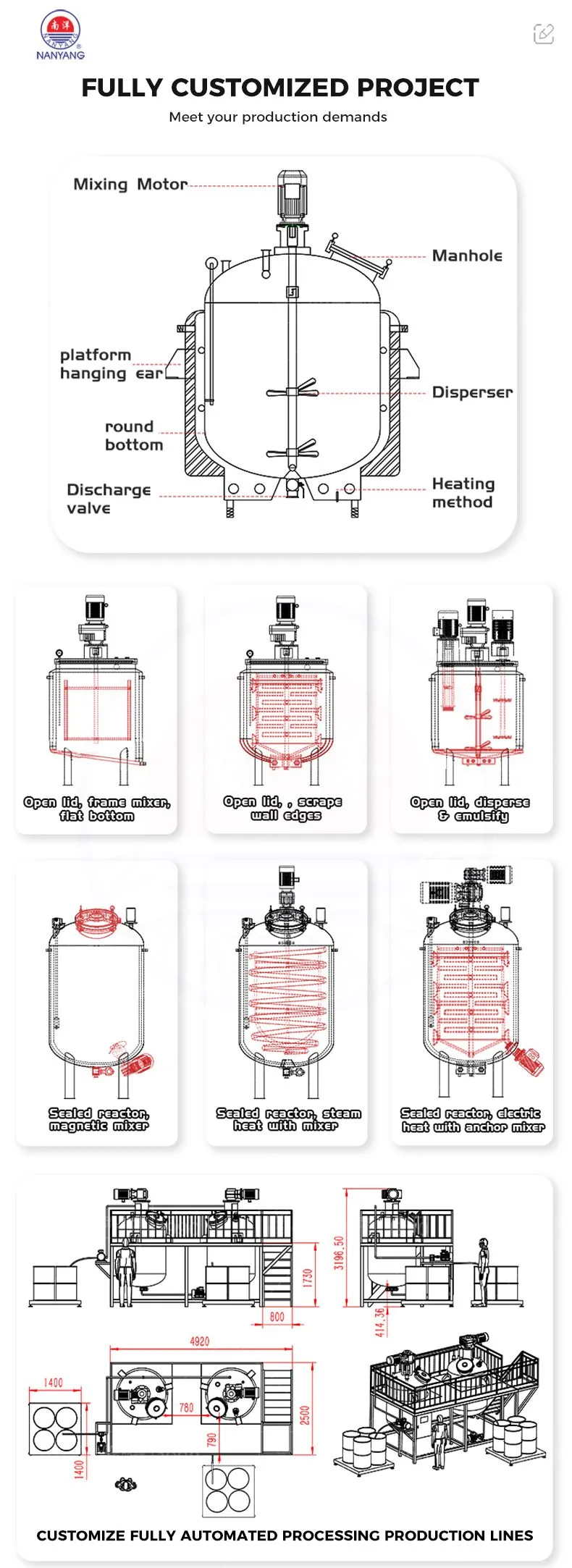
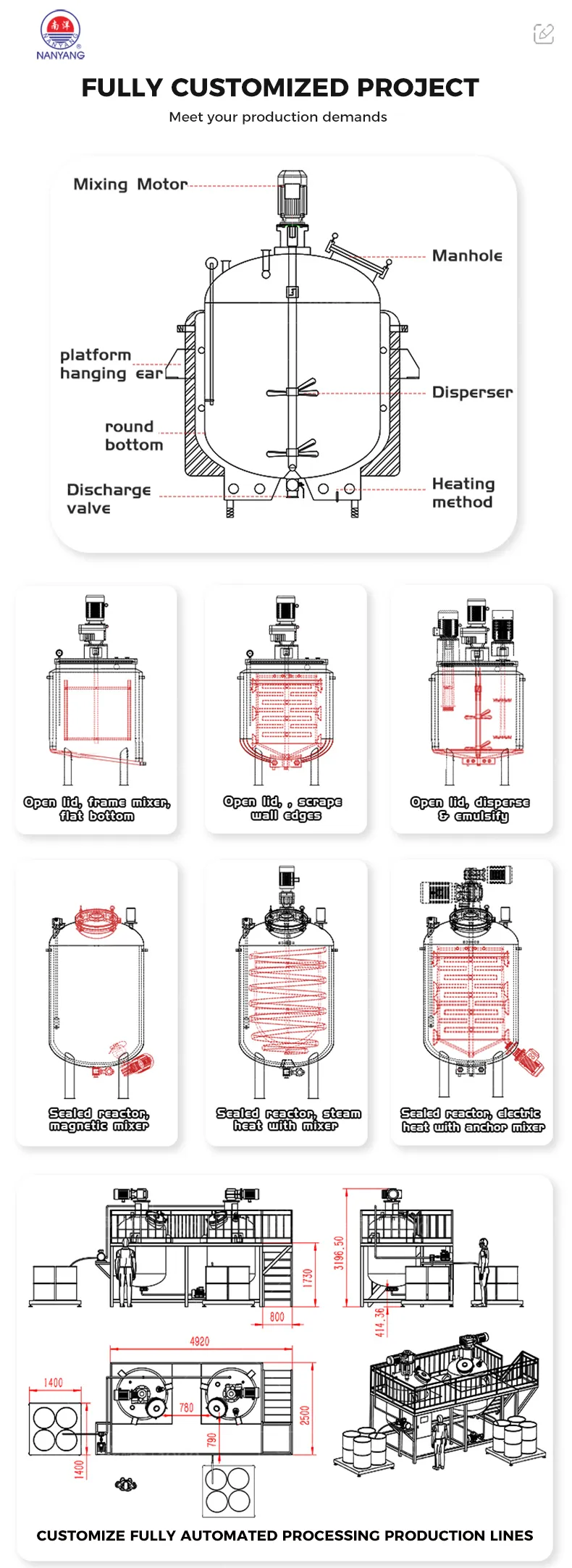
A typical vacuum homogenizer mixing tank consists of the following key components
| Component | Function |
|---|---|
| Main Mixing Tank | Primary vessel where mixing and emulsification occur; made of SUS304 or SUS316L stainless steel for hygiene and durability |
| Jacket (Heating/Cooling) | Double-layer structure allowing steam, hot water, or thermal oil circulation for precise temperature control |
| High-Shear Homogenizer | Rotor-stator design that breaks down particles to achieve ultra-fine emulsions (80 mesh particle size) |
| Agitator & Scraper System | Ensures uniform mixing and prevents material from sticking to tank walls |
| Vacuum Pump System | Removes air bubbles, prevents oxidation, and extends product shelf life |
| PLC Control System | Allows precise monitoring and adjustment of speed,temperature, and vacuum pressure |
Applications Across Industries
1. Food & Beverage Industry
Mixing tanks are essential for producing sauces, dressings, soups, dairy products, fruit juice concentrates, syrups, jams, and chocolate. Jacketed tanks are particularly valuable for processes like pasteurization, emulsification, and maintaining consistent textures.
Example: A sauce manufacturer uses a jacketed mixing tank to heat tomato paste and spices uniformly, ensuring consistent flavor and texture across every batch
2. Daily Chemical & Personal Care Industry
Liquid detergents, laundry soaps, fabric softeners, shampoos, shower gels, hand sanitizers, and body washes all require precise mixing and emulsification. A homogenizer mixer applies high shear to break droplets and form stable emulsions – critical for products that contain oils and surfactants.
Example: A shampoo producer uses a vacuum homogenizer to blend surfactants, conditioners, and active ingredients under vacuum, eliminating bubbles and ensuring a smooth, glossy final product
3. Cosmetic Industry
Creams, lotions, gels, ointments, sunscreens, and toothpaste are produced using vacuum emulsifying mixers. These machines combine oil and water phases into fine, stable emulsions with superior texture and consistency.
Example: A skincare brand uses a vacuum emulsifying mixer to produce a high-end moisturizing cream, achieving ultra-fine particle size for superior skin absorption and long shelf life
4. Pharmaceutical Industry
Syrups, oral liquids, ointments, and creams require strict GMP compliance and precise formulation control. Stainless steel mixing tanks with sanitary finishes (Ra ≤ 0.8µm) and CIP/SIP systems are essential for pharmaceutical manufacturing
How to Choose the Right Mixing Tank & Homogenizer
When selecting a mixing tank for your production line, consider the following key factors:
1. Capacity Requirements
Assess your production volume to determine the appropriate tank size. Capacities range from small laboratory models (5–20 liters) to large-scale industrial units (up to 20,000 liters or more). Operating a tank at 15–40% of its maximum volume is common for good mixing performance.
2. Material Grade
All product-contact parts should be made of SUS304 or SUS316L stainless steel for corrosion resistance, durability, and hygiene. SUS316L offers superior resistance to acidic and saline products, making it ideal for food and cosmetic applications
3. Heating & Cooling Options
Choose between electric heating, steam heating, or thermal oil heating depending on your product's sensitivity and required temperature range. Electric heating is cost-effective for small to medium batches (50–1000L), while steam heating provides rapid heating for large-scale production (1000–10000L).
4. Homogenizer Specifications
Higher homogenizer speeds (up to 2800 RPM) produce ultra-fine emulsions but may generate additional heat. Consider the viscosity of your product – high-viscosity materials demand robust agitation systems.
5. Vacuum Capabilities
Ensure the mixer can achieve vacuum levels between -0.08 MPa and -0.09 MPa to effectively remove air and prevent oxidation.
6. Control System
A PLC touchscreen control system allows automatic temperature control, variable speed mixing, timing, and data storage for consistent batch-to-batch quality
Why Choose a Reliable Manufacturer?
Choosing the right supplier is as important as choosing the right machine. A reputable manufacturer ensures:
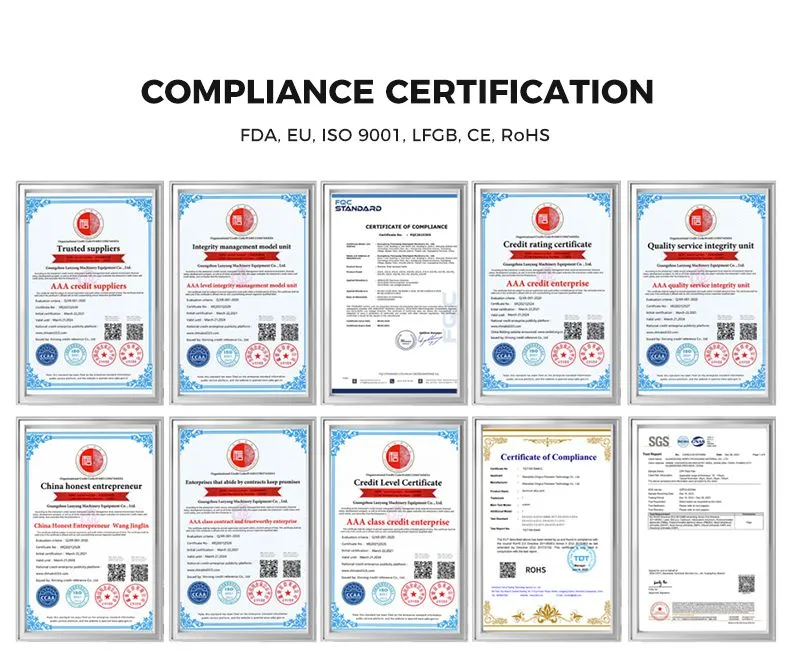
Compliance with international standards – CE, GMP certifications
High-quality materials and construction – Durable stainless steel with sanitary finishes
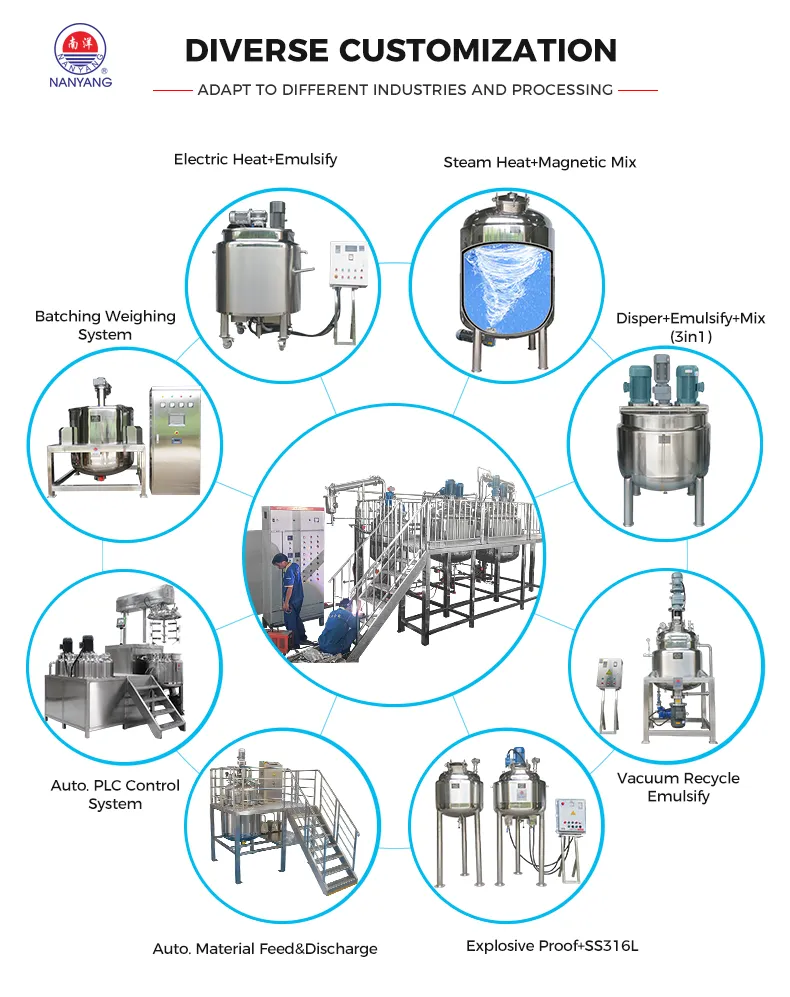
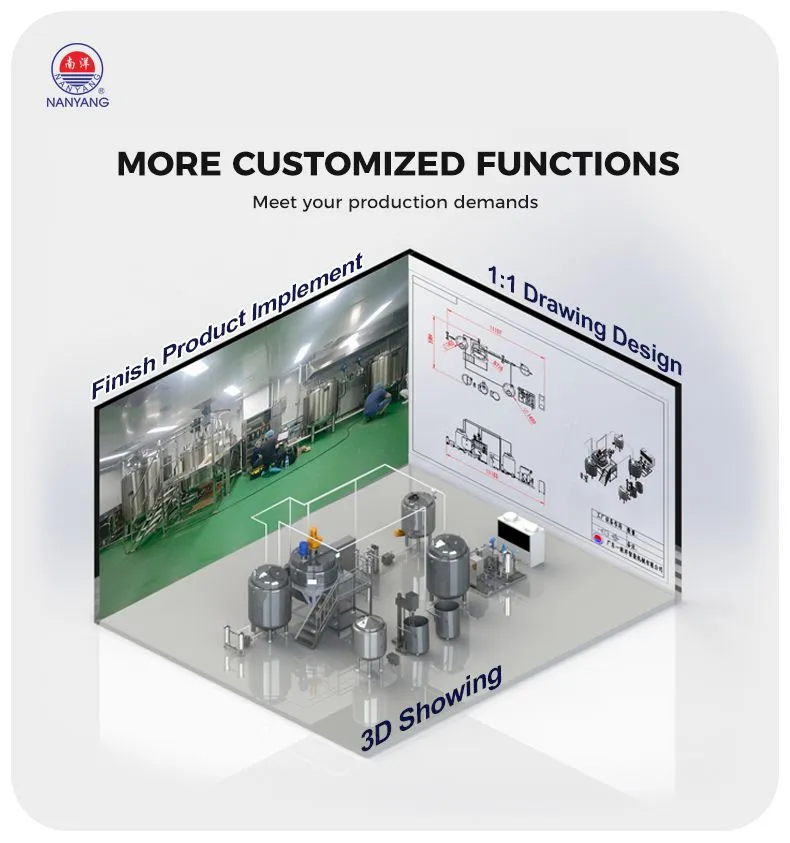
Customization capabilities – Tailored solutions for capacity, heating method, voltage, and control system
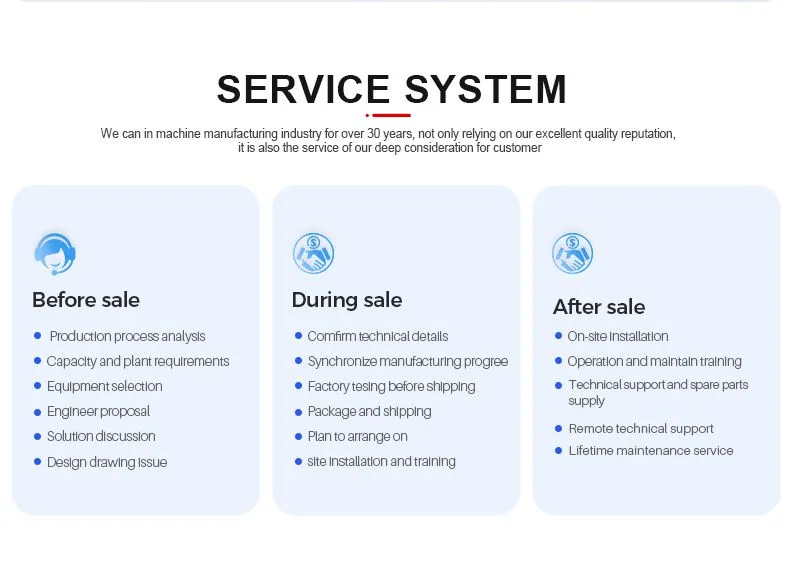
After-sales support – One-year warranty, spare parts availability, and remote troubleshooting
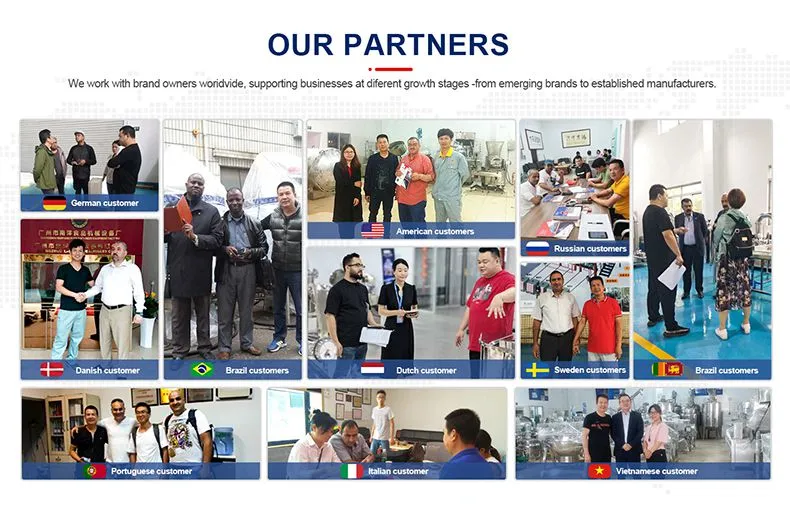
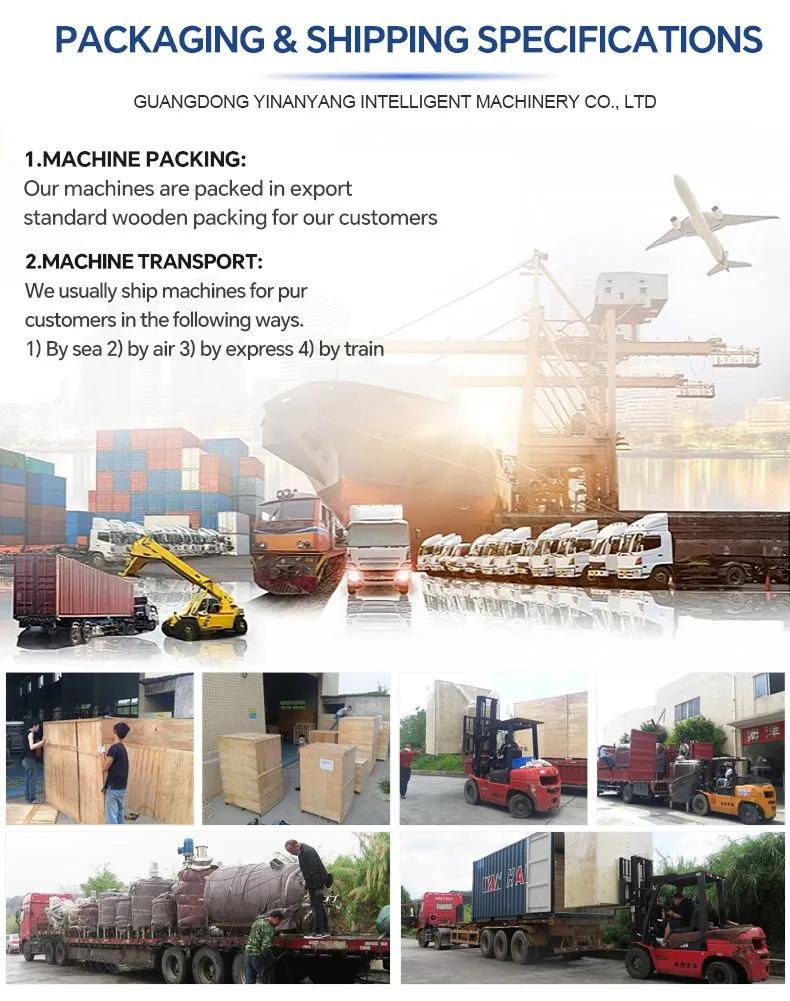
Global shipping – Professional export packaging and reliable logistics
Conclusion
Investing in a high-quality stainless steel mixing tank with vacuum homogenizer is a strategic decision that directly impacts your product quality, production efficiency, and brand reputation. Whether you are producing food, beverages, cosmetics, or daily chemicals, the right equipment ensures consistent results, regulatory compliance, and long-term profitability.
If you are looking for a reliable partner to supply customized mixing tanks and homogenizers for your production line, we are here to help. Contact us today to discuss your specific requirements and get a tailored solution!
Recently Posted
-
How to Choose the Right Jacketed Kettle for Your Materials Jacketed Kettle VS Planetary Cooking Wok
September 4, 2026How to Choose the Right Jacketed Kettle for Different Raw‑MaterialsSelecting a suitable cooking kettle according to your material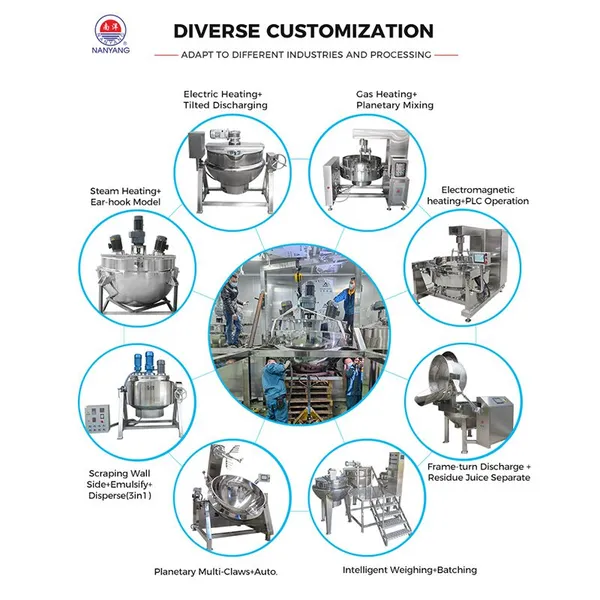 Read More
 -
How to Select Suitable Powder & Granule Mixer from Guangdong Yinanyang Intelligent Machinery
September 2, 2026How to Select Suitable Powder & Granule MixerChoosing the right powder and granule mixer is critical to stable product quality Read More
 -
Electric, steam, electromagnetic, and gas heating - which industrial heating method is the best?
August 28, 2026IntroductionChoosing the right heating method for your industrial equipment can significantly impact production efficiency, produc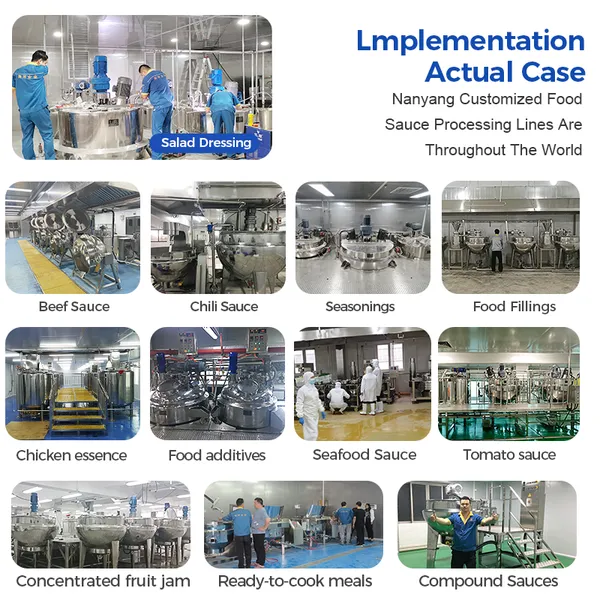 Read More
 -
Custom Stainless Steel Jacketed Reactor Vessel with Multi‑Type Agitator for Liquid Paste Sauce Proce
August 26, 2026Image 1:Overall unit photo of stainless steel reactor Image 2:Different agitator impeller comparison chart (anchor, frame, paddle,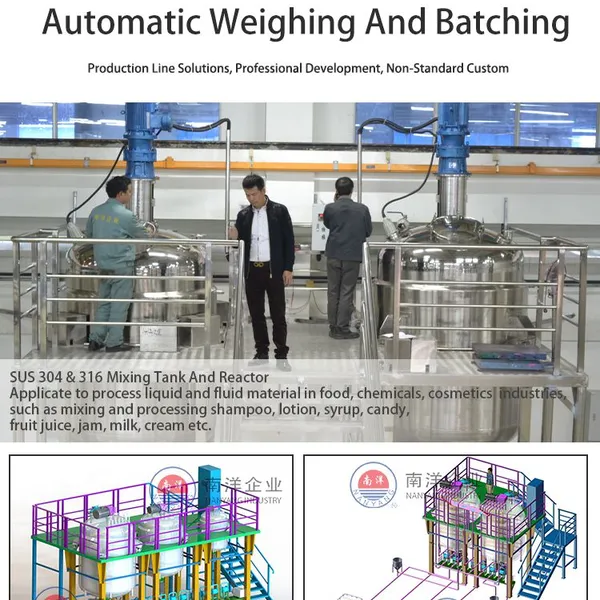 Read More

Contact Us

Recommended Products
-
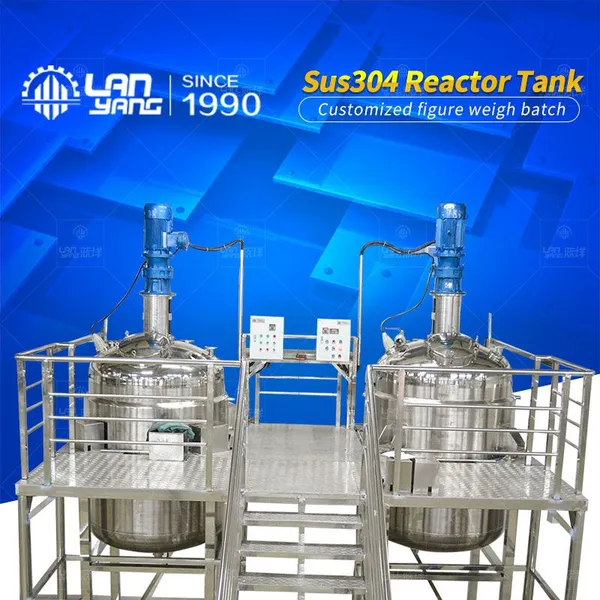
 Stainless Steel High-speed Mixer, Vacuum Reactor, Electric Heating High Temperature Liquid Weighing Reactor, Steam ReactorUS$ 38000 - 988888MOQ: 1 Piece
 -
Electric Heating Sol Kettle, Colloid High Temperature Stirring Tank, Sealed Reaction Kettle, Stirring EquipmentUS$ 14000 - 98888MOQ: 1 Piece
-
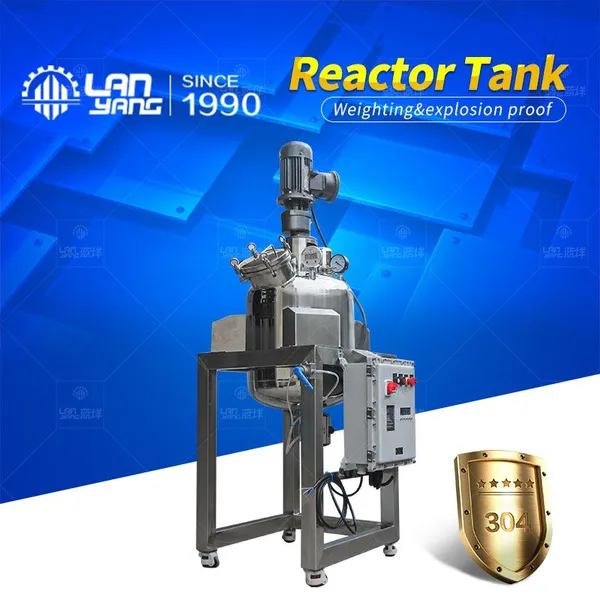
Automatic Weighing Stainless Steel Reactor High Precision Auto Quantitative Feeding Industrial Reaction VesselUS$ 24500 - 9888888MOQ: 1 Piece
-
Stainless Steel Sealed Stirring Tank,Electric Heating Reactor, Quantitative Weighing and Filling EquipmentUS$ 24500 - 9888888MOQ: 1 Piece
-
Stainlessautomatic Weighing Single-layer Reaction Kettle, Vertical Electric Heating Sealed Tank, Stainless Steel Reaction KettleUS$ 24500 - 9888888MOQ: 1 Piece
-
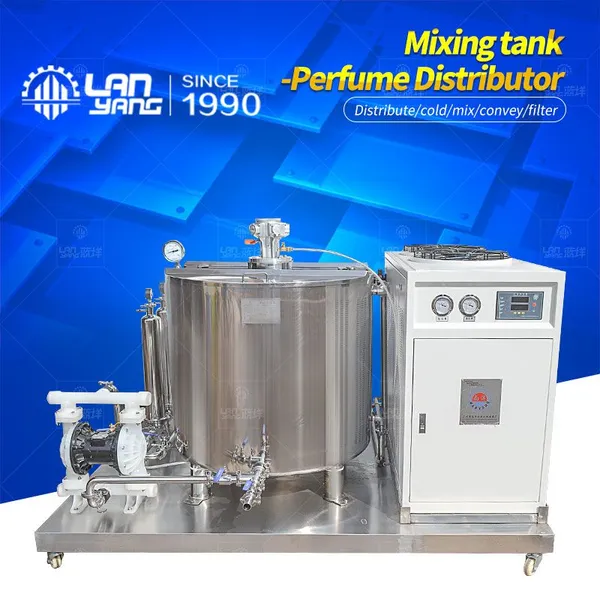
50-1000L Stainless Steel Perfume Mixing Machine With Cooling, Stirring & Filtration System,stainless Steel Perfume BlenderUS$ 5500 - 18888MOQ: 1 Set
-
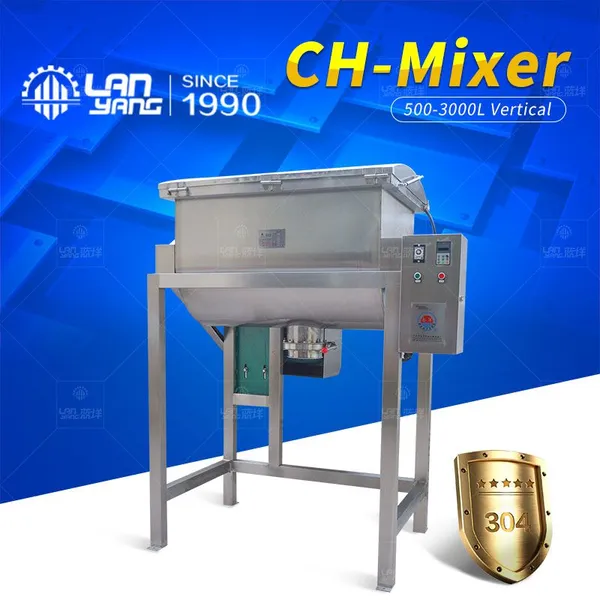
Supply Foshan Factory Powder Mixer/fruit Powder Mixer/powder Mixer ManufacturerUS$ 3600 - 98888MOQ: 1 Piece
-
240 Type Small Bag Granule Packaging Machine, White Sugar Bag Filling and Sealing All-in-one Machine, Automatic Measuring Cup Packaging MachineUS$ 25800 - 98888MOQ: 1 Piece
-
VIP55 Automatic Sauce Vacuum Packaging Machine, Bag Vacuum Packaging Machine, Ketchup Bag Packaging MachineUS$ 103000 - 988888MOQ: 1 Piece
-
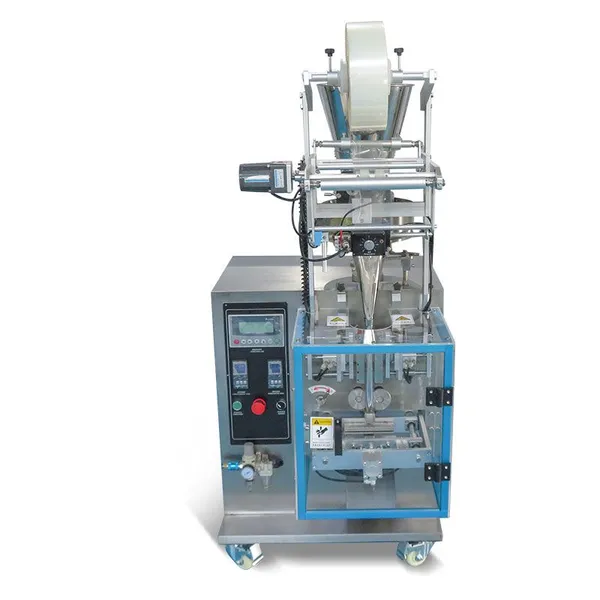
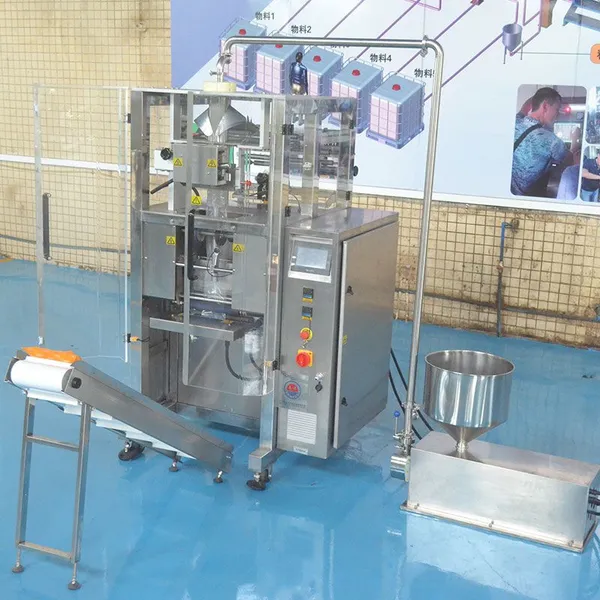
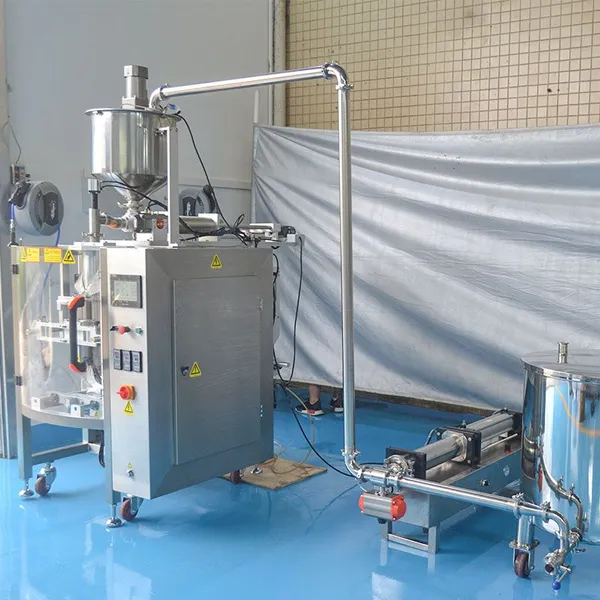
Large Sauce Packaging Machine, Automatic Bag Packaging Machine, Automatic Filling and Sealing Bag Machine for KetchupUS$ 60000 - 98888MOQ: 1 Piece
-
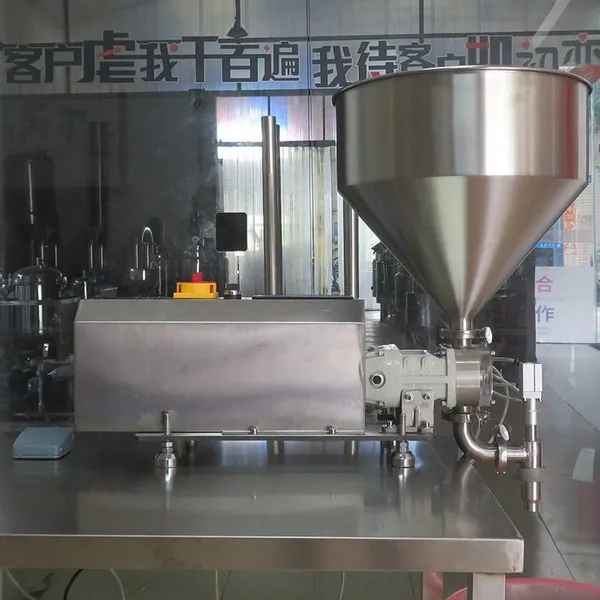
Rotor Pump Filling Machine, Semi-Automatic Filling Machine, Liquid Paste Universal Filling MachineUS$ 12000 - 98888MOQ: 1 Piece
-
Double Skin Milk Secondary Automatic Filling Machine Double Head Automatic Filling Machine Automatic Filling LineUS$ 68888 - 988888MOQ: 1 Piece
-
Automatic Ignition Sandwich Pot/ Gas Heating Stirring Pot/ Scrape and Bottom Thick Sauce Mixer / Pourable Gas Cooking PotUS$ 4200 - 9888MOQ: 1 Set
-
Stainless Steel Sealed Storage Tank Single-layer Storage Tank Sanitary Food Grade Stainless Steel 304 Material Tank BodyUS$ 1000 - 19600MOQ: 1 Piece
-
Honey Thickener Stainless Steel Low Temperature Heating Vacuum Defoaming FilterUS$ 20800 - 98888MOQ: 1 Piece
-
Gas Drum Wok, Beef Cooking Machine, Stainless Steel Heating Mixer, Particle MixerUS$ 28000 - 98888MOQ: 1 Piece
-
Vertical Electric Heating Jacketed Pot,Stainless Steel Jacketed Pot,Sandwich Cooking Pot,Jam Saucepan/Jacketed PanUS$ 2288 - 98888MOQ: 1 Set
-
Small Honey Production Line, Honey Concentrator, Honey Filter, Honey Filling Machine,Honey Concentration Processing Production LineUS$ 35500 - 988888MOQ: 1 Piece
-
Nanyang Spray Liquid Powder Mixer – Stainless Steel W-Type Double Cone Blender With Atomizing Nozzle System, 100L-2000L Custom Capacity, GMP StandardUS$ 3888 - 98888MOQ: 1 Piece
-
Mobile Sauce Cooling Tank Unit – Stainless Steel Jacketed Cooling Mixer With Double Helix Agitator,Temp Control, GMP Standard, Custom CapacityUS$ 3888 - 9888888MOQ: 1 Piece